»Seven new vulnerabilities are being disclosed in common DNS software dnsmasq, reminiscent of 2008 weaknesses in Internet DNS Architecture.«



This article describes how Corellium, already familiar with Apple's mobile SoCs, boots Linux on Apple silicon.
»Have you ever wondered what the random art or visual fingerprint is all about when creating OpenSSH keys or connecting to OpenSSH servers?« This post gives you the answer.
»The Individual Developer subscription for RHEL can be used in production for up to 16 systems.«
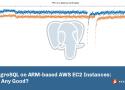
Percona compared the price-performance of PostgreSQL on x86 and ARM AWS EC2 instances.
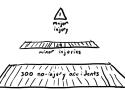
The author points out shortcomings of error-budget-based approaches in SRE.

This series of posts provides insight into the SUSE product development and the upcoming merge of the SLE and openSUSE Leap.
In this blog post, Chris Siebenmann explains the consequences of not tuning ZFS to match your database's requirements.
Noteworthy changes:
- Official cloud images
- Introduction of ifupdown-ng
- Improved WiFi setup
- PHP 8.0 available
- Node.js (LTS) performance improvement
- Initial support for cloud-init
»A temporary SMS right from your terminal written in POSIX sh«
»A set of utilities to help you manage VMs with Virtualization.framework«
AlmaLinux is a new RHEL fork, with its first release planned within Q1, 2021.
TinyCheck is a network capturing software that is best run on a Rasberry Pi 3+.

Major changes:
- Core modules in PE format
- Vulkan backend for WineD3D
- DirectShow and Media Foundation support
- Text console redesign

»Free memory is wasted memory or how to make the best use of swap. «

In this post, Donella Meadows summarizes the general “systems wisdom” she obtained from modeling complex systems.
This article explains how the WRT54G became the most famous home wireless router there ever was.

This blog post explains why Elastic changing the license of Elasticsearch and Kibana to Server Side Public License (SSPL) is problematic for its users.

Out of the lack of alternatives, Jared Mauch built his own internet provider that now offers fiber-to-the-home broadband.
The author encourages the completeness concept in software and emphasizes the advantages of focusing on stability and reliability instead of adding new features.